ribu1c Installation Manual: A Comprehensive Guide
This manual details the setup of ribu1c, covering server and client components, AI model integration (GPT-5), and troubleshooting steps for a seamless experience.

ribu1c is a cutting-edge platform designed to enhance productivity through intelligent automation and seamless AI integration. This manual provides a comprehensive guide to installing and configuring ribu1c, enabling users to leverage its powerful features. The system is built to work alongside existing workflows, offering code completion assistance via tools like GitHub Copilot, powered by advanced AI models such as GPT-5.
ribu1c distinguishes itself by offering both free and paid API options, catering to diverse needs – from personal educational projects to demanding commercial applications requiring enhanced reasoning capabilities. The platform supports various data formats, including Word documents, Excel spreadsheets, and PDFs, facilitating versatile data processing. Its core strength lies in its ability to understand complex tasks and provide intelligent solutions, making it an invaluable asset for developers and researchers alike.
System Requirements
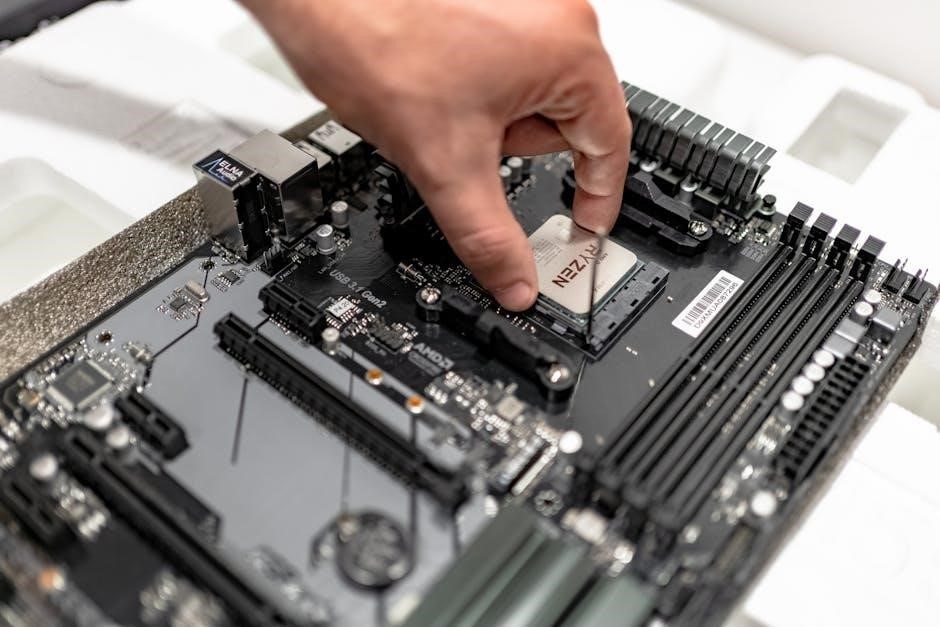
ribu1c demands specific hardware and software configurations to ensure optimal performance and stability. Before proceeding with the installation, verify your system meets these criteria. Regarding hardware, a minimum of 8GB RAM is recommended, alongside a multi-core processor (Intel i5 or AMD Ryzen 5 equivalent) for efficient processing. Storage requirements are at least 50GB of free disk space, preferably an SSD for faster access times.

ribu1c is compatible with a range of operating systems, including Windows 10/11 (64-bit), macOS 11 or later, and popular Linux distributions like Ubuntu and Fedora. Database support includes both SQL Server and PostgreSQL. Accessing advanced AI features, like GPT-5 integration, may necessitate a stable internet connection and adherence to API usage guidelines.
2.1 Hardware Specifications
ribu1c’s performance is directly tied to your hardware. We recommend a processor with at least four cores – Intel Core i5 or AMD Ryzen 5 are suitable baselines. A minimum of 8GB RAM is crucial, though 16GB is highly advised for handling larger datasets and concurrent AI processing. For storage, a 256GB Solid State Drive (SSD) is strongly recommended to minimize loading times and improve responsiveness.
Graphics requirements are modest; integrated graphics are generally sufficient. However, a dedicated GPU with 2GB VRAM can accelerate certain AI-driven features. Ensure your system has a stable power supply capable of handling these components. Finally, a reliable network interface card (NIC) is essential for client-server communication and accessing cloud-based AI models.
2.2 Supported Operating Systems

ribu1c is designed for broad compatibility, supporting both Windows and Linux server environments. Specifically, we officially support Windows Server 2019 and newer, as well as popular Linux distributions like Ubuntu 20.04 LTS, CentOS 7/8, and Debian 11. Client applications are available for Windows 10/11 and macOS 11 (Big Sur) or later.
While other operating systems may function, they are not officially supported and may encounter compatibility issues. Ensure your chosen operating system is fully updated with the latest security patches before installation. 64-bit architecture is required for both server and client installations. We are actively evaluating support for additional operating systems based on user demand and testing.
Obtaining the Installation Files

ribu1c installation files are exclusively available through our official channels to ensure authenticity and security. Downloading from unofficial sources poses significant risks, including malware and compromised software. Access the latest server and client installers via our official website’s download section, requiring a valid user account.
Alternatively, authorized partners may distribute installation packages. Always verify the source before proceeding. Upon download, it’s crucial to verify the file integrity using the provided SHA-256 checksum. This confirms the file hasn’t been tampered with during transit. Detailed instructions for checksum verification are available in the accompanying documentation.
3.1 Downloading from Official Sources

To download ribu1c from official sources, navigate to our website’s dedicated downloads page. You will need a registered account; new users can create one free of charge. The page categorizes downloads by operating system and component (server, client). Select the appropriate package for your environment.
Downloads are delivered as compressed archive files (e.g., .zip, .tar.gz). Ensure you have compatible software for extraction. The website provides direct download links and mirrors for faster access. Regularly check for updates, as new versions address bugs and introduce enhancements. Official sources guarantee the integrity and authenticity of the software, protecting against malicious modifications.
3.2 Verifying File Integrity
After downloading the ribu1c installation files, verifying their integrity is crucial. This ensures the files haven’t been corrupted during download or tampered with. Our website provides SHA-256 checksums for each downloadable package. Download the corresponding checksum file alongside the installation archive.
Utilize a checksum utility (available for all major operating systems) to calculate the SHA-256 hash of the downloaded file. Compare the calculated hash with the value provided on our website. A match confirms the file’s integrity. If the hashes differ, do not proceed with the installation; re-download the file. This step safeguards against potential security risks and installation failures.
Installation Process ー Server Component
The server component forms the core of ribu1c, handling data processing and AI model interactions. Before beginning, ensure your system meets the outlined hardware and software requirements. The installation initiates with database setup, supporting both SQL Server and PostgreSQL. Choose your preferred database and configure connection parameters – host, port, username, and password.
Next, execute the server application installer. Follow the on-screen prompts, accepting the license agreement and specifying the installation directory. During installation, the application will register necessary services and configure initial settings. Post-installation, verify the server is running correctly by accessing the administration interface through your web browser.
4.1 Database Setup (SQL Server, PostgreSQL)
Prior to server installation, a compatible database must be configured. ribu1c supports both Microsoft SQL Server and PostgreSQL. For SQL Server, ensure the SQL Server instance is running and accessible. Create a new database specifically for ribu1c, granting appropriate permissions to the installation user. PostgreSQL requires a similar setup – a running instance and a dedicated database.
During the server installation process, you’ll be prompted for database connection details: server address, port number, database name, username, and password. Double-check these credentials for accuracy. Incorrect details will result in connection errors. Consider enabling database backups for disaster recovery purposes.
4.2 Installing the Server Application
Once the database is prepared, proceed with the server application installation. Execute the installer, accepting the license agreement. The installer will guide you through the process, requesting the database connection details configured in the previous step. Verify these details carefully to avoid connection issues.
Choose an appropriate installation directory. The installer will copy necessary files and configure the server environment. After installation, the server application will typically start automatically as a service. Monitor the installation logs for any errors. Post-installation, confirm the server is running and accessible via the specified network address and port.
Installation Process ー Client Component
The client component enables user interaction with the ribu1c server. Begin by downloading the appropriate client application for your operating system. Once downloaded, execute the installer and follow the on-screen instructions. The installation process is generally straightforward, requiring acceptance of the license agreement and selection of an installation directory.
After installation, launch the client application. The initial setup will involve configuring a connection to the ribu1c server. This requires specifying the server’s network address and port. Ensure the server is running and accessible from the client machine. Successful connection establishes the link for utilizing ribu1c’s functionalities.
5.1 Client Application Download & Installation
Obtain the client application installer from the official ribu1c download page. Ensure you select the version compatible with your operating system – Windows, macOS, or Linux. Download the installer file and verify its integrity using the provided checksum (SHA-256) to ensure it hasn’t been corrupted during download.
Once verified, double-click the installer to begin the installation process. Follow the on-screen prompts, accepting the license agreement and choosing an installation directory. The installer will copy the necessary files and create shortcuts for easy access. A typical installation takes only a few minutes to complete. Upon completion, launch the application to proceed.
5.2 Configuring Client Connection to Server
After installing the client application, you must configure it to connect to the ribu1c server. Launch the client and navigate to the “Settings” or “Connection” menu. You will need the server’s address (IP address or hostname) and port number, which were specified during server installation.
Enter these details into the corresponding fields. If the server requires authentication, provide the necessary username and password. Test the connection to verify that the client can successfully communicate with the server. A successful connection will display a status indicator. If the connection fails, double-check the server address, port, and credentials.
Post-Installation Configuration
Following the successful installation of both server and client components, several configuration steps are crucial for optimal performance and security. Begin with initial system settings, such as time zone and language preferences, accessible through the server’s administration panel.
Next, focus on user account creation. Define user roles and permissions carefully, granting access only to necessary features. Strong passwords and multi-factor authentication are highly recommended. Ensure proper firewall configuration to restrict unauthorized access to the server. Regularly review and update these settings to maintain a secure and efficient ribu1c environment.
6.1 Initial System Settings
Upon initial server startup, configuring fundamental system settings is paramount. Access the administration console, typically via a web browser using the server’s IP address and designated port. Begin by setting the correct time zone to ensure accurate data logging and scheduling; Configure the default language for the user interface, supporting multiple languages for diverse teams.
Define the default date and number formats to align with regional standards. Establish logging levels – from minimal to verbose – to control the amount of diagnostic information recorded. Finally, configure email server settings for system notifications and password recovery. These initial settings establish the foundation for a smoothly operating ribu1c instance.
6.2 User Account Creation & Permissions
Creating user accounts and assigning appropriate permissions is crucial for system security and data integrity. Within the administration console, navigate to the user management section. Add new users, specifying unique usernames, strong passwords, and email addresses for communication.
ribu1c employs a role-based access control (RBAC) system. Define roles – such as administrator, editor, and viewer – each with specific permissions. Administrators have full control, editors can modify data, and viewers have read-only access. Assign users to roles based on their responsibilities. Regularly review and update permissions to maintain a secure environment. Consider multi-factor authentication for enhanced security.
Understanding AI Model Integration (GPT-5 & Similar)
ribu1c leverages the power of advanced AI models, like GPT-5, to enhance functionality and streamline workflows. Integration allows for features such as intelligent code completion, automated documentation, and sophisticated data analysis. The system supports various models, offering flexibility based on specific needs and available resources.
GPT-5, a unified system, provides both a general-purpose model for broad queries and a deeper reasoning model (“GPT-5 thinking”) for complex tasks. Accessing these models often requires API keys, with free options available for personal or educational use, and paid tiers for enhanced reasoning capabilities. Remember free API keys have usage restrictions and are prohibited for commercial applications.
7.1 Utilizing AI for Code Completion (GitHub Copilot)
ribu1c seamlessly integrates with GitHub Copilot, providing developers with intelligent code suggestions directly within the editor. Copilot utilizes various AI models, impacting the quality and relevance of its completions. Users can leverage Copilot Chat for more conversational assistance, benefiting from premium models available with a Copilot subscription.
This integration significantly accelerates development speed and reduces errors. Copilot suggests entire lines or functions, adapting to the project’s context. Students can access GitHub Copilot Student, offering unlimited completions and access to advanced features. Remember that Copilot works alongside developers, enhancing productivity rather than replacing them.
7.2 Accessing and Configuring AI Models within ribu1c
ribu1c provides a centralized interface for accessing and configuring integrated AI models, including GPT-5 and similar technologies. Users can select from available models based on their specific needs, considering factors like reasoning capabilities and cost. While GPT-5 offers a baseline level of intelligence, accessing the ‘thinking’ model or purchasing paid API options unlocks enhanced performance.
Free API keys are available for personal, educational, and non-profit research use, but commercial applications are strictly prohibited. These keys have limitations in reasoning power. ribu1c simplifies the process of managing API keys, ensuring secure access to AI functionalities. The system supports models capable of processing diverse file types, like Word documents and PDFs.
Troubleshooting Common Installation Issues

During ribu1c installation, users may encounter issues. This section addresses frequent problems and provides solutions. Database connection errors are common; verify database server availability, credentials, and network connectivity. Ensure the database is properly configured to accept connections from the ribu1c server.
Client-server communication problems can arise from firewall restrictions or incorrect server addresses. Confirm firewall rules allow communication on the necessary ports. Double-check the server address configured within the client application. Insufficient API key permissions or limitations can also cause issues with AI model access. Review API key status and usage limits.
8.1 Database Connection Errors
Database connection failures during ribu1c installation are frequently encountered. First, verify the database server is running and accessible from the ribu1c server machine. Double-check the database credentials (username, password) entered during the setup process for accuracy. Ensure the database user has the necessary permissions – typically, create, read, write, and execute privileges.
Network connectivity issues can also prevent a successful connection. Confirm there are no firewall rules blocking communication on the database port (e.g., 5432 for PostgreSQL, 1433 for SQL Server). Examine database server logs for specific error messages that can pinpoint the problem. Finally, test the connection using a separate database client tool.
8.2 Client-Server Communication Problems
Issues with client-server communication often arise after ribu1c installation. Begin by confirming the ribu1c server application is running and listening on the configured port. Verify network connectivity between the client machine and the server; a simple ping test can help diagnose basic reachability. Ensure no firewalls are blocking communication on the designated port.
Incorrect server address or port configuration within the client application is a common cause. Double-check these settings. Examine server logs for any errors related to client connections. If using a proxy server, ensure it’s correctly configured for both client and server. Finally, confirm DNS resolution is working correctly, translating the server hostname to the correct IP address.
Security Considerations
Maintaining a secure ribu1c environment is paramount. Implement robust firewall rules to restrict access to the ribu1c server, allowing only necessary traffic. Regularly update the server and client applications to patch security vulnerabilities. Employ strong passwords for all user accounts and enforce multi-factor authentication where possible.
Data encryption, both in transit and at rest, is crucial. Utilize TLS/SSL for all client-server communication. Consider encrypting the database containing sensitive information. Regularly audit user permissions to ensure the principle of least privilege is followed. Be mindful of API key security, especially when integrating with AI models like GPT-5, and restrict access accordingly.

9.1 Firewall Configuration
Proper firewall configuration is the first line of defense for your ribu1c installation. Configure your firewall to allow inbound traffic only on the ports required by the ribu1c server application – typically a specific port for client connections and potentially port 80/443 for web-based access. Block all other inbound traffic to minimize the attack surface.
Outbound rules should permit communication to necessary external services, such as the AI model APIs (GPT-5). Carefully review and restrict outbound access to only trusted destinations. Regularly audit firewall rules to ensure they remain effective and aligned with your security policies. Consider using a Web Application Firewall (WAF) for enhanced protection against web-based attacks.
9.2 Data Encryption
Protecting sensitive data is paramount. ribu1c supports data encryption both in transit and at rest. Enable Transport Layer Security (TLS) / Secure Sockets Layer (SSL) for all client-server communication to encrypt data in transit, preventing eavesdropping. Utilize strong cipher suites and regularly update TLS certificates.

For data at rest, consider encrypting the database where ribu1c stores its information. Many database systems (SQL Server, PostgreSQL) offer built-in encryption features. Implement robust key management practices to securely store and manage encryption keys. Regularly back up encrypted data and store backups in a secure, offsite location. Ensure compliance with relevant data privacy regulations.
API Key Management (GPT-5 Series)
ribu1c leverages GPT-5 for advanced features; proper API key management is crucial. Accessing GPT-5 requires a valid API key from OpenAI. Free API keys are available for personal, educational, and non-profit research use, but have usage limitations and restrictions against commercial applications.
Paid API options unlock enhanced reasoning capabilities and higher rate limits. Securely store your API key within ribu1c’s configuration settings – avoid hardcoding it directly into the application. Regularly rotate API keys to mitigate security risks. Monitor API usage to prevent unexpected costs and identify potential misuse. Understand OpenAI’s terms of service regarding API key usage and responsible AI practices.
10.1 Obtaining Free API Keys (Personal/Educational Use)
To utilize GPT-5’s capabilities within ribu1c without immediate cost, obtain a free OpenAI API key. This is primarily intended for personal projects, educational purposes, and non-profit research. Verification may be required to confirm student status for access to enhanced features like unlimited completions and premium models in Copilot Chat.
Visit the OpenAI platform and create an account; Navigate to the API key section and generate a new key. Be aware that free keys have limitations on request rates and may offer reduced reasoning capabilities compared to paid options. Strict adherence to OpenAI’s terms of service is mandatory; commercial use is prohibited.
10.2 Paid API Options for Enhanced Reasoning Capabilities
For demanding ribu1c applications requiring superior AI performance, consider upgrading to a paid GPT-5 API subscription. Free API keys offer limited reasoning power; paid tiers unlock the full potential of GPT-5’s deeper analytical models, such as “GPT-5 thinking,” crucial for complex tasks.
Paid options provide increased request limits, reduced latency, and access to specialized models optimized for specific domains like mathematics, programming, and law. These subscriptions are essential for professional use and large-scale deployments. OpenAI offers various pricing tiers based on usage and features. Evaluate your needs carefully to select the most cost-effective plan.